Besuchszeiten09:00 AM – 06:00 PM
|Samstag, August 15, 2026Cankurtaran, Topkapı Sarayı, 34122 Fatih, Istanbul, Türkei
Zurück zu history
ceremony
How Ceremonies Moved Through Topkapi
A short primer on ceremonial routes and thresholds across Topkapi’s courtyards.
12/17/2025
8 min read
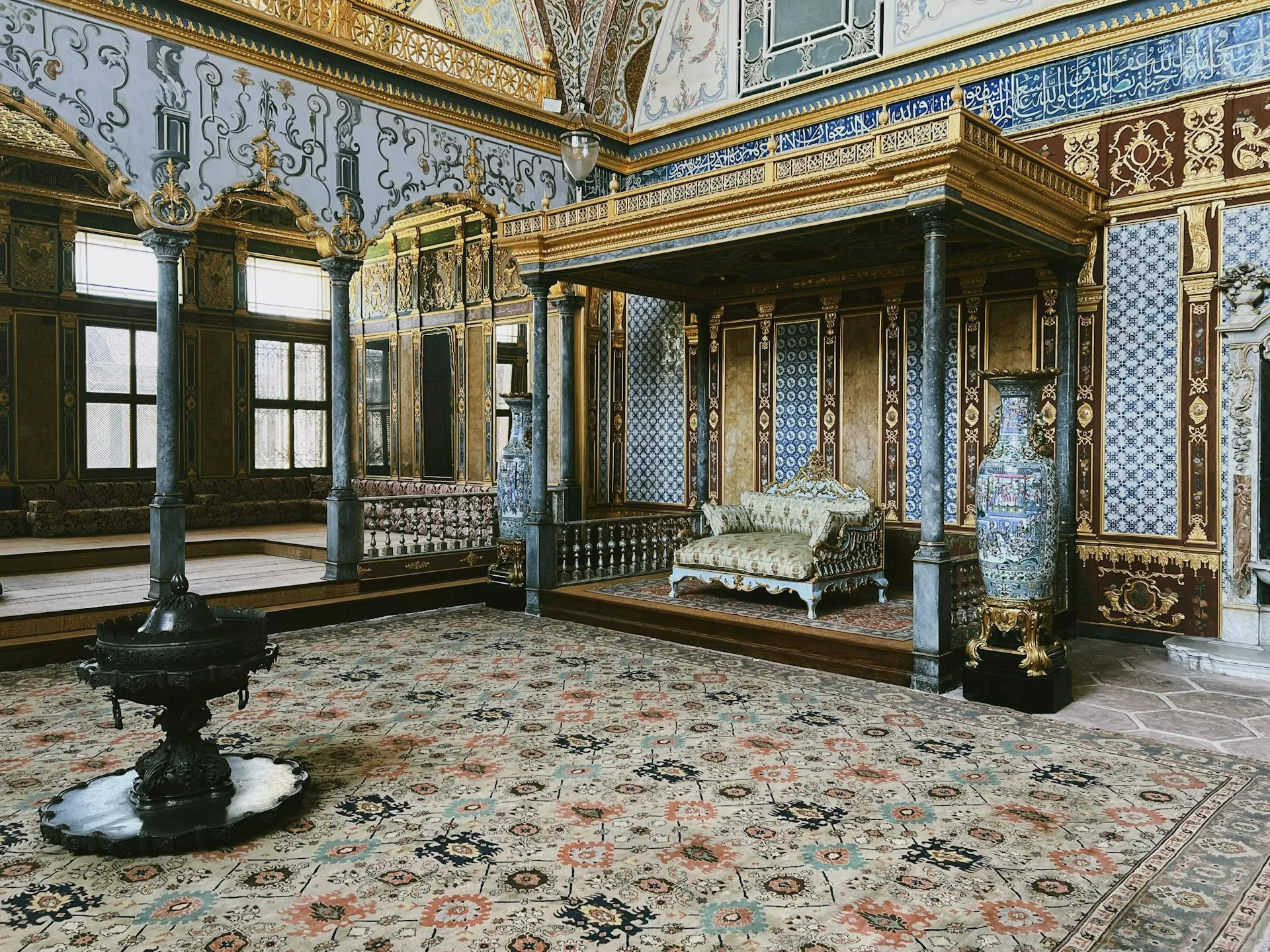
> Quick take: **Access narrows**, **axes clarify**, and **thresholds speak** — routes choreograph rank in motion.
---
## How Routes Work
- **Filtering**: more gates, more guards, fewer people.
- **Alignment**: straight lines signal formal movement; angled turns slow the body.
- **Signals**: doors, carpets, and grilles announce status and sequence.
---
## Reading Courtyards as Script
- Second Courtyard: supply + policy — wide, serviceable lanes.
- Third Courtyard: ceremony — centered axes and controlled approaches.
- Fourth Courtyard: repose — drift lines, pauses, and seats.

---
## Visitor Exercise
1. Pick a doorway; note what it asks you to do (bow? slow? remove shoes?).
2. Walk the center line, then the edge — how does it change your view and speed?
3. Count thresholds between a public space and a private one.
---
## Why It Matters
Ceremonies weren’t improvised — space enforced order. These routes encoded who may proceed, how fast, and with what posture.
---
## Bottom Line
Routes are **messages** you can walk — once you notice them, the palace starts talking back.
Über den Autor

Istanbul Planner
Ich habe dies erstellt, damit Sie dem Topkapi‑Palast mit Ruhe, Kontext und Sorgfalt begegnen—damit Gärten, Galerien und Bosporuslicht die Jahrhunderte klar erzählen.
Tags
procession
thresholds
routes
ritual
Comments (0)
Leave a Comment
Loading comments...