Visiting timetableClosed
|Friday, October 2, 2026Cankurtaran, Topkapı Sarayı, 34122 Fatih, Istanbul, Türkiye
Back to history
overview
History of Topkapi Palace: Sultans, Courts, Architecture, and Change
A deep historical guide to Topkapi — its courtyards, institutions, major eras, and restorations from conquest to museum.
12/17/2025
18 min read
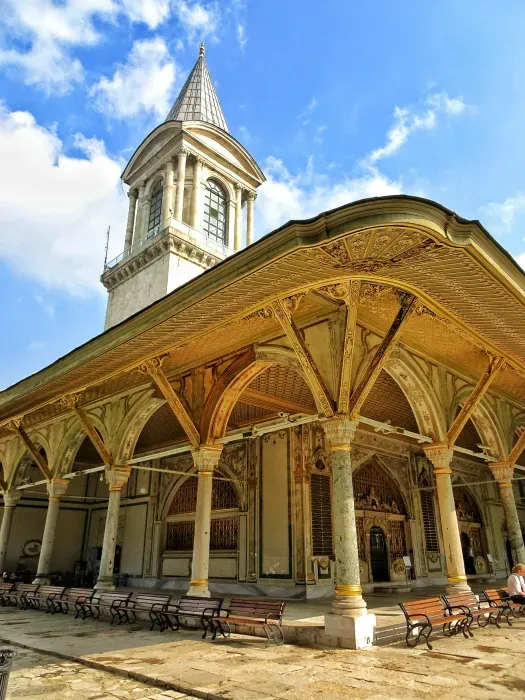
> Quick take: **Topkapi Palace** is the **political heart** of the Ottoman Empire for centuries — a layered complex where **courtyards**, **councils**, and **ritual routes** turned architecture into **government**.
---
## Origins (1459–1485)
- Founded by **Mehmed II (Fatih)** after the 1453 conquest, on the **Seraglio Point** between the **Bosphorus** and **Golden Horn**.
- Early works established the **First and Second Courtyards**, basic kitchens, workshops, and the **Divan-ı Hümayun** (Imperial Council).
- Choice of site: defensible promontory, **sea breezes**, and commanding urban views.
---
## Classical Height (16th Century)
- Under **Suleiman the Magnificent** and successors, Topkapi matured into a complex with:
- **Second Courtyard**: **Divan chambers**, **Tower of Justice**, **kitchens** feeding thousands.
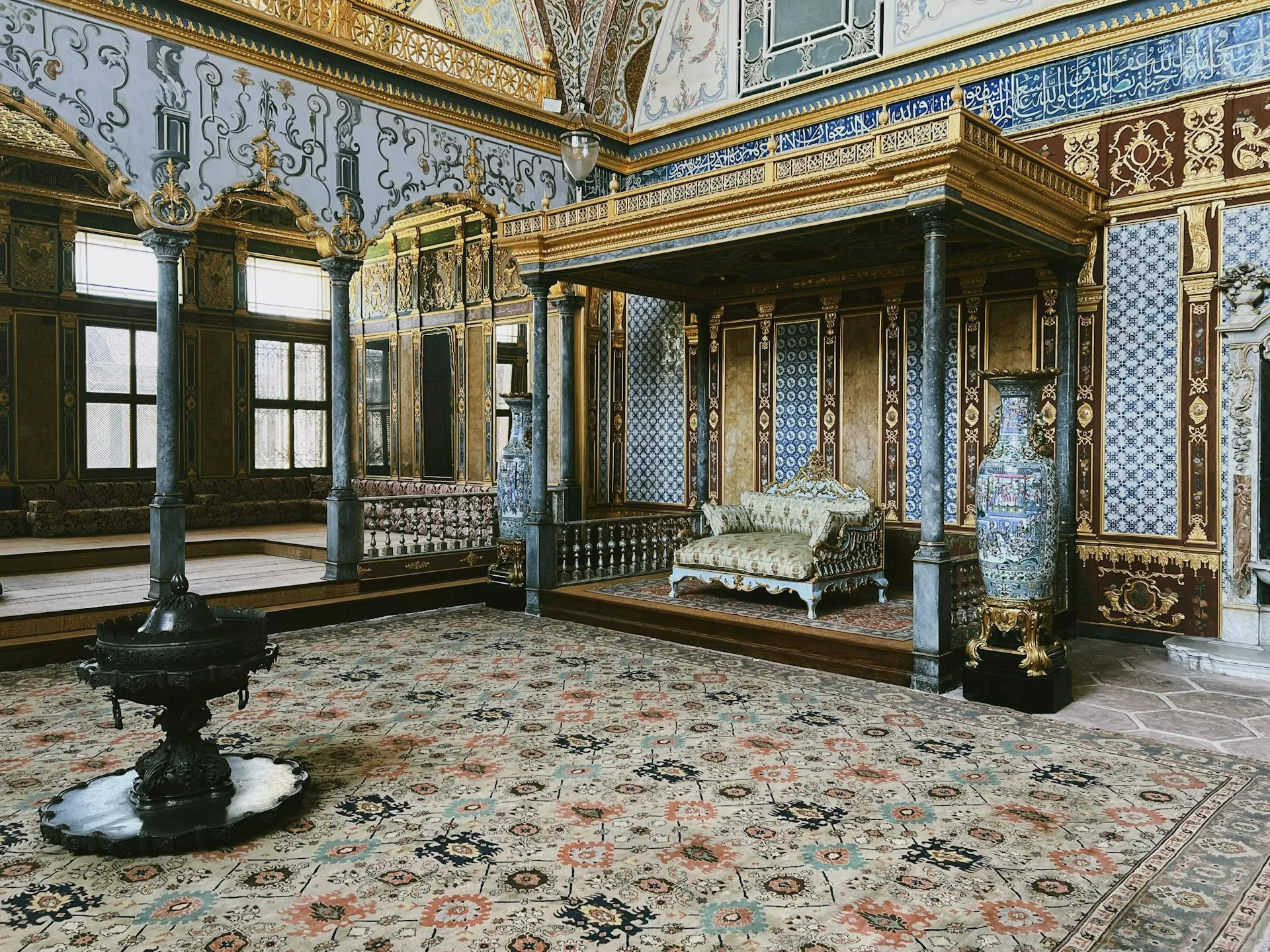
- **Third Courtyard** (Enderun): **Audience Chamber**, **Enderun School** for elite training.
- **Harem** expanded under the **Valide Sultan**.
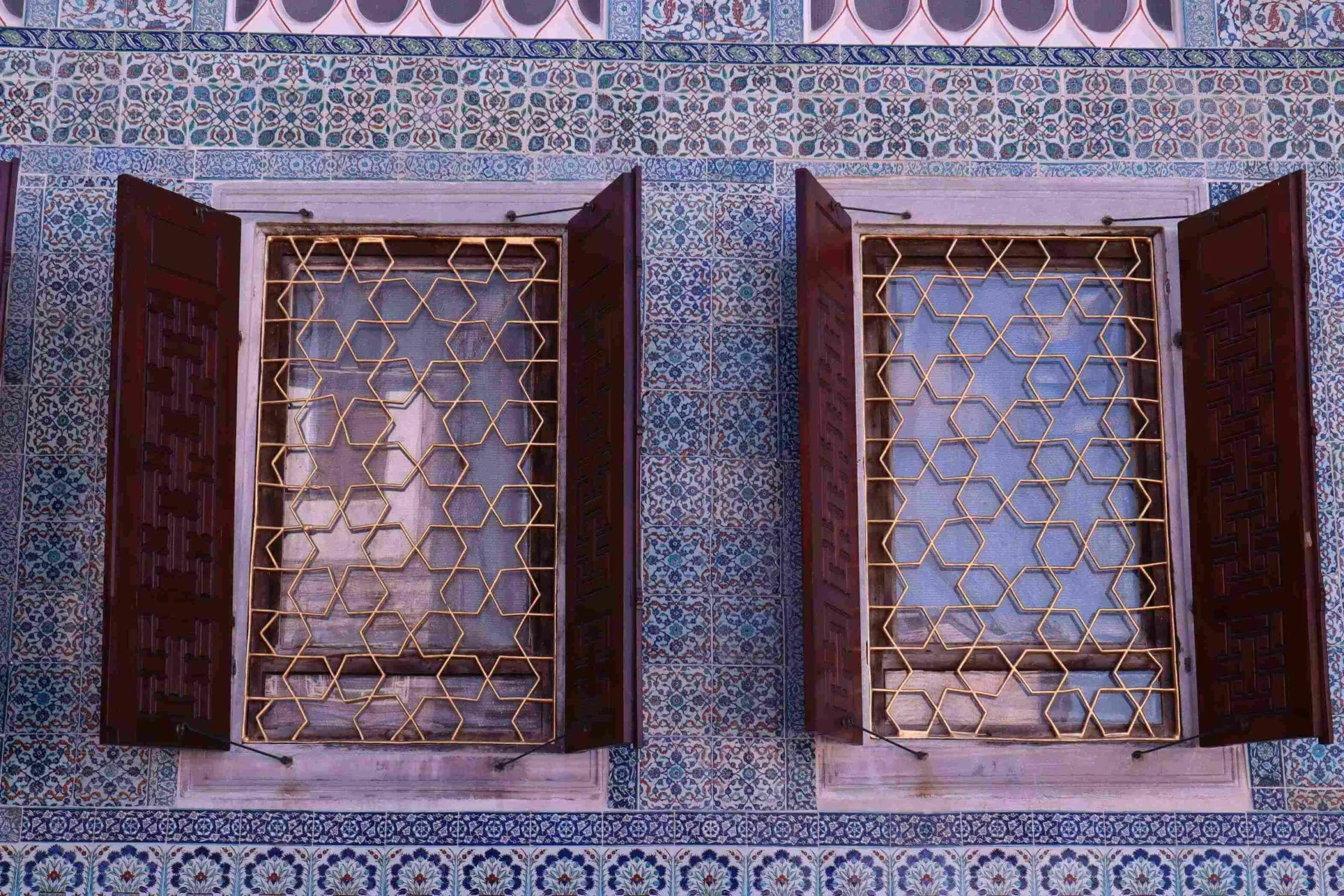
- **Iznik tiles**, **calligraphy bands**, and **delicate woodwork** symbolized refinement and piety.
| Space | Function | Marker |
| --- | --- | --- |
| Divan | Council, petitions | Tower of Justice |
| Enderun | Elite school | Audience Chamber |
| Kitchens | Feasts logistics | Chimney forests |
| Harem | Family + protocol | Golden Road |

---
## Institutions That Ran an Empire
- **Divan-ı Hümayun**: ministers and scribes; law, finance, diplomacy.
- **Enderun School**: training pages in **languages**, **administration**, **arts**, and **court etiquette**.
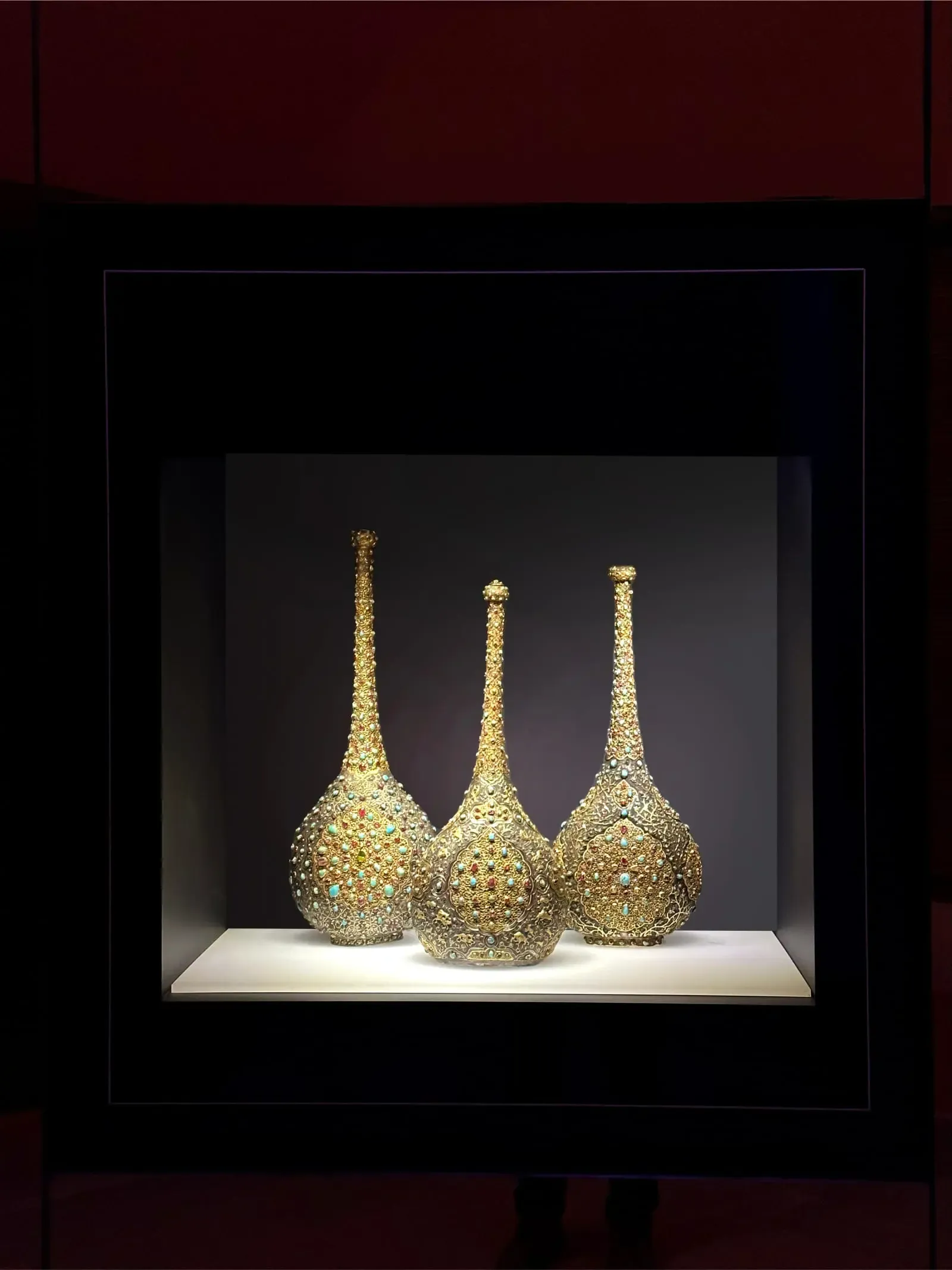
- **Treasury**: ceremonial gifts, armor, and regalia.
- **Sacred Relics** (later): venerated items housed with strict ritual.
---
## Courtyards: A Walk Through Power
- **First Courtyard** (outer works): **Hagia Irini**, service buildings; open to wider traffic.
- **Second Courtyard**: kitchens, **Divan**, **Tower of Justice** — where policy met logistics.
- **Third Courtyard** (Enderun): **Audience Chamber**, library — the intellectual and ceremonial core.
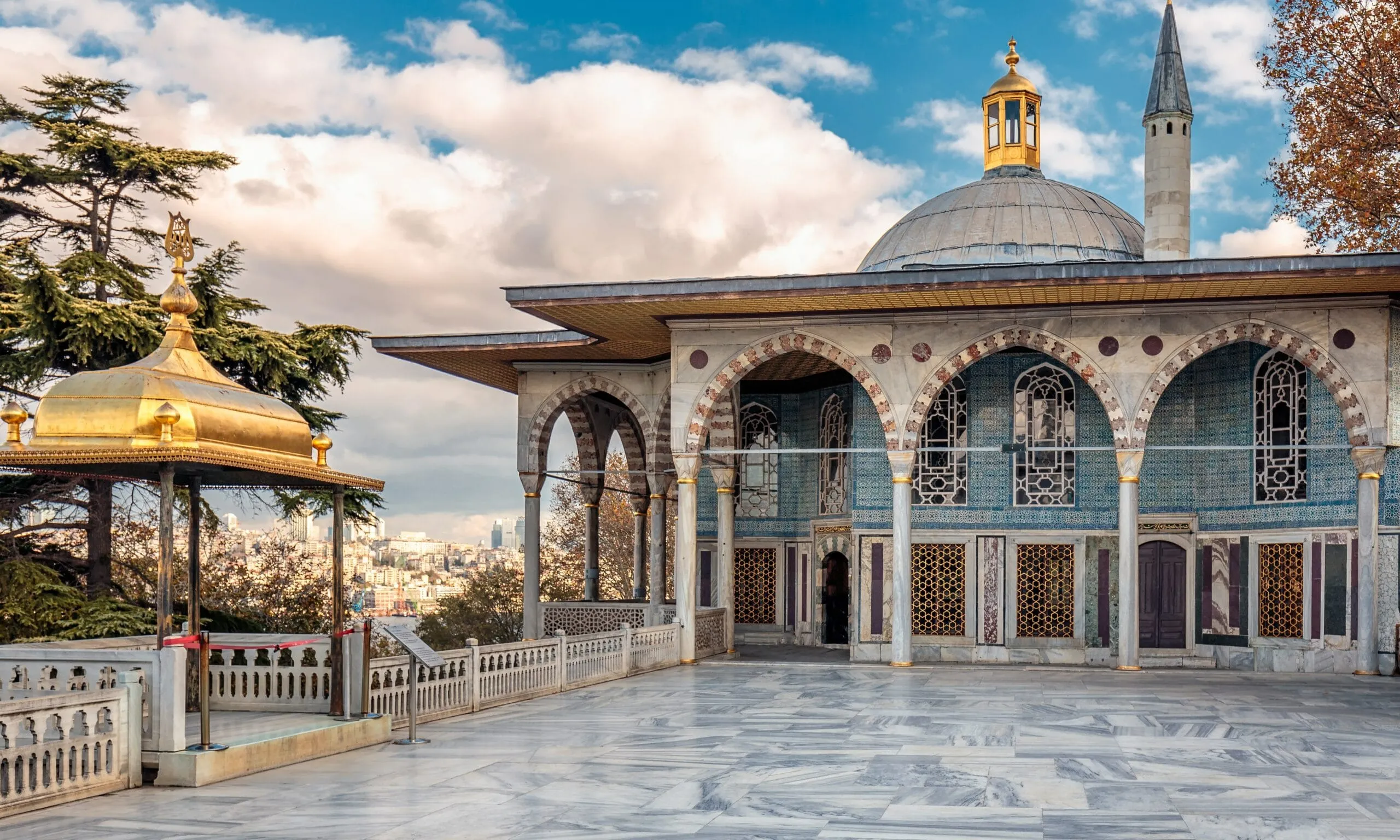
- **Fourth Courtyard**: gardens, kiosks, and pavilions where **leisure** staged sovereignty.
---
## Turbulence: Fires, Quakes, and Repairs
- Multiple **fires** in kitchens and wooden wings triggered restorations.
- **Earthquakes** brought structural repairs; arches and vaults often proved resilient.
- Renovations balanced utility with ceremony — **function protected ritual**.
---
## The Tulip Era & 18th–19th Century Changes
- The **Tulip Era** introduced **leisure aesthetics** and garden culture.
- With modernization, sultans favored **Dolmabahçe** and **Yıldız**; Topkapi’s role shifted.
- Administrative pivots during **Tanzimat** reforms recast the palace’s relationship to governance.
---
## Into the Museum Era (20th Century → Today)
- Topkapi opened to the **public** as a museum, curating the **Treasury**, **Sacred Relics**, manuscripts, and textiles.
- Conservation refined **tiles**, **wood**, **glass**, and **paper** care; lighting and footfall management protect surfaces.
---
## Architecture as Script
- **Processional routes** and **thresholds** choreograph status — who may pass where, in what order.
- **Material languages** (tile, gold leaf, carved wood) communicate rank and ideological presence.
- **Light control** (grilles, stained glass) creates **lateral glow** suitable for reading, prayer, and ceremony.
---
## Visiting with History in Mind
- Start at the **Second Courtyard** — read the kitchens and **Divan** as the empire’s **supply + policy** engine.
- Pause under the **Tower of Justice** and imagine petitions flowing to the council.
- In the **Third Courtyard**, stand by the **Audience Chamber** and consider diplomacy as theater.
- End at gardens/pavilions: sovereignty expressed as **calm** and **order**.
| Spot | What to Notice | Photo Tip |
| --- | --- | --- |
| Divan | Doors, grille screens | Step off-axis to avoid glare |
| Tower of Justice | Vertical emphasis | Frame with courtyard edges |
| Audience Chamber | Thresholds + carpets | Shoot diagonals for depth |
| Kitchens | Chimneys rhythm | Low angle for repeating lines |
---
## FAQ
- **Why is the Tower of Justice important?**
- It **symbolizes oversight** above the council — justice watching policy.
- **Was Topkapi the only palace?**
- No; later courts used **Dolmabahçe** and **Yıldız**, but Topkapi remained **ceremonially central**.
- **How long to tour with a history focus?**
- **2–3 hours** for courtyards + council + Audience Chamber, longer if adding **Treasury** and **Relics**.
---
### Image Highlights



---
## Bottom Line
Topkapi is **government made spatial** — a palace where **architecture, ritual, and learning** together sustained an empire.
About the Author

Istanbul Planner
I built this to help you meet Topkapi Palace with calm, context, and care—so gardens, galleries, and Bosphorus light can speak clearly of centuries.
Tags
Topkapi Palace
Ottoman Empire
Mehmed II
Divan
Enderun
Comments (0)
Leave a Comment
Loading comments...