A palace shaped by ritual
Arcades, tiles, kitchens, and galleries carry the memory of sultans, scholars, artisans, and stewards.
Table of Contents
Foundations: conquest, court, and the peninsula
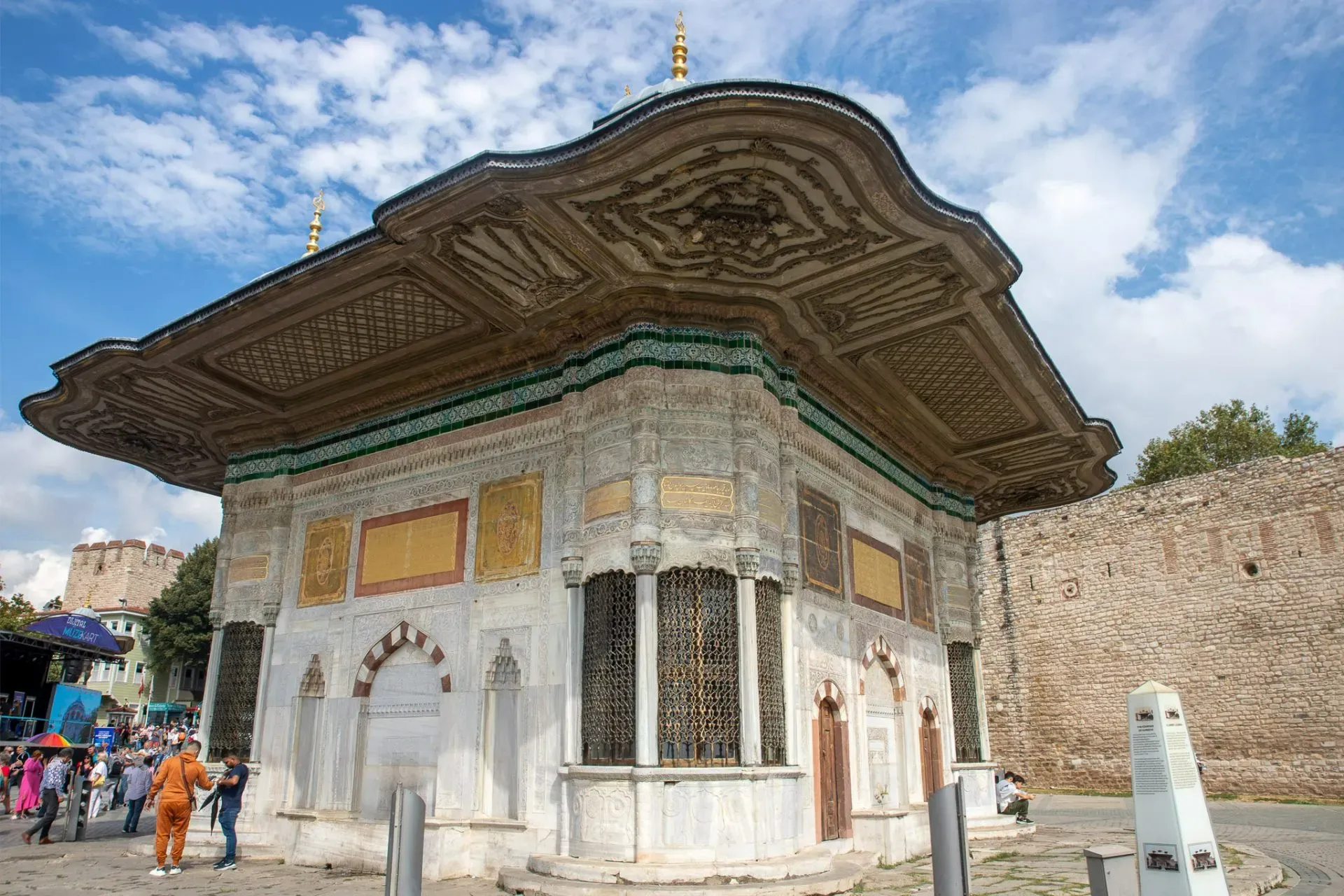
After the conquest of Constantinople, the Ottomans drew court life into light and air—placing the palace on the Historic Peninsula where sea, gardens, and ceremony could speak together. The Bosphorus became not only a route but a horizon against which decisions felt measured.
Topkapi grew as a city within a city: kitchens as vast as villages, archives like quiet memory banks, and courtyards that turned movement into meaning—public rhythm outside, calm intention within.
Courtyard logic: from protocol to privacy
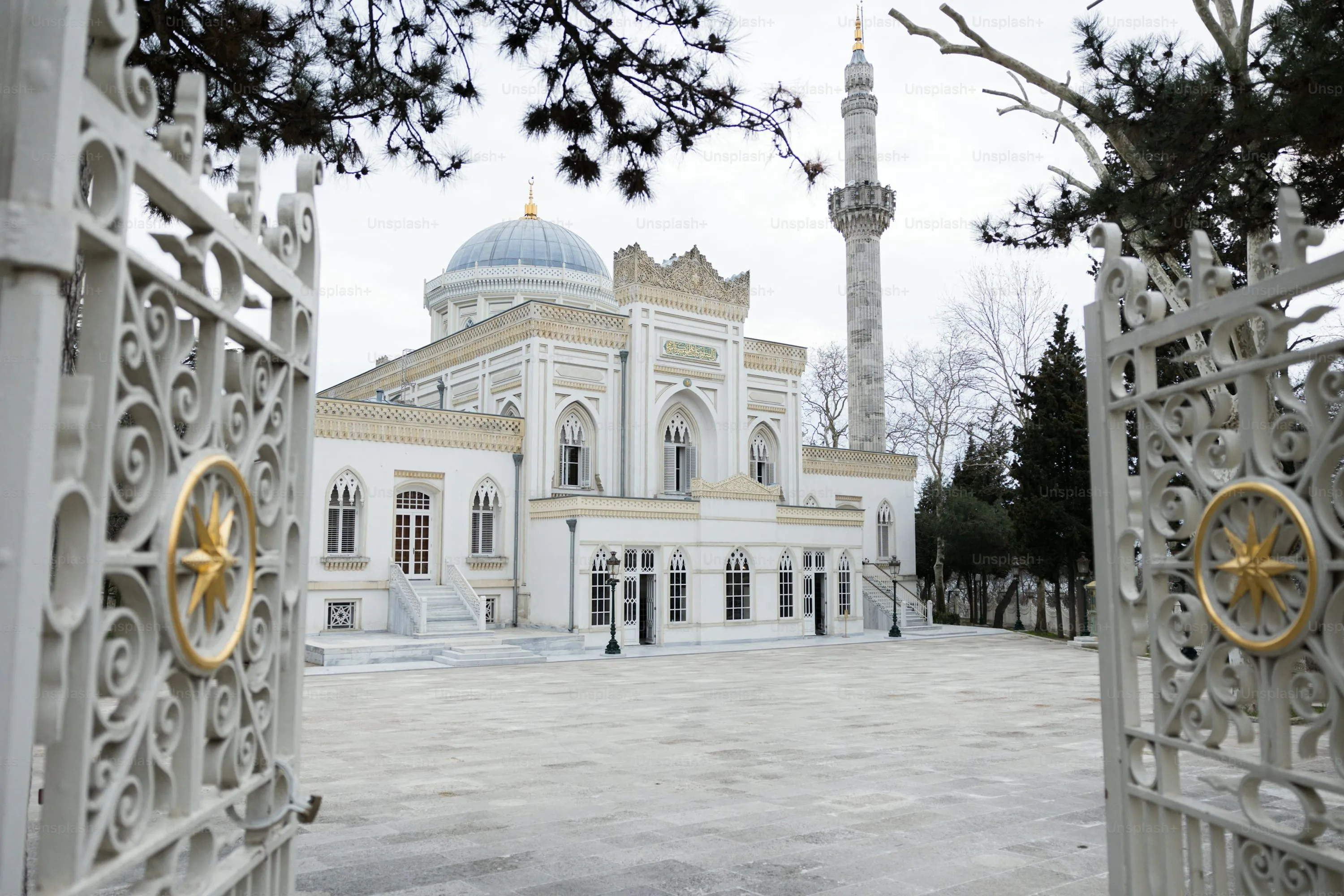
Topkapi unfolds in stages: the First Courtyard opens the approach, the Second organizes administration and kitchens, the Third narrows into the sultan’s closer world, and the Fourth lets gardens and terraces breathe over the water.
Each gate was a sentence in the palace’s grammar: processions, audiences, and quiet crossings. Architecture made etiquette visible—thresholds taught visitors when to speak and when to listen.
The Harem: layered daily life
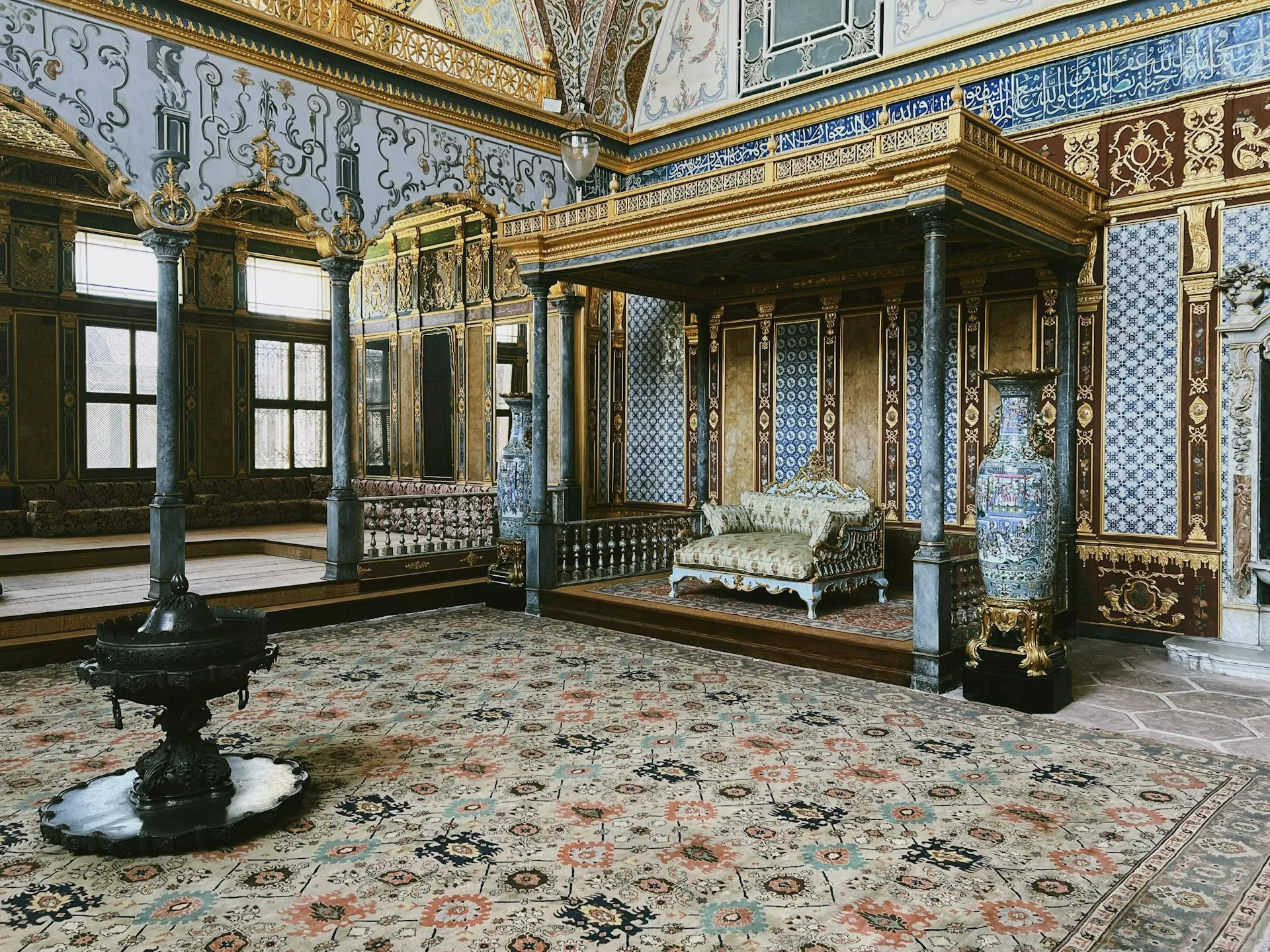
The Harem balanced privacy, education, and ritual—apartments and classrooms, corridors and baths, a structured world where daily rhythms and learning were braided together in moderated calm.
Tiles caught light like soft water; lattices filtered sound; rooms kept secrets and stories. Life here was layered with rules and kindness—voices moving carefully through beautiful space.
Kitchens, logistics, and abundance
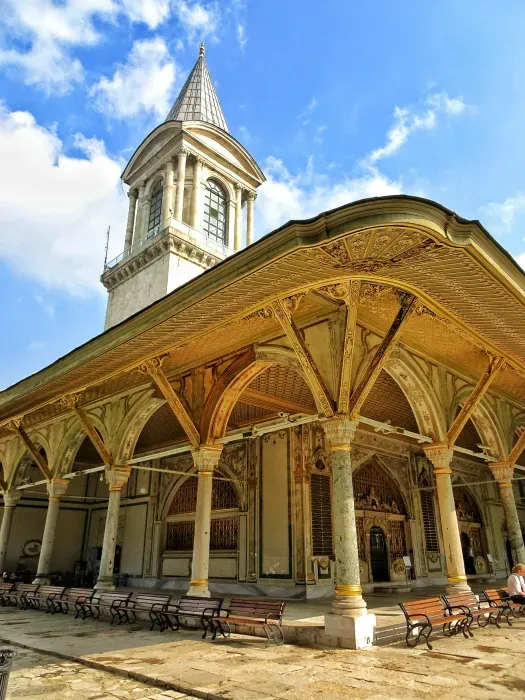
The palace’s kitchens were towns of their own—bread, stews, sweets, and spices moving with rhythm and precision. Logistics gave ceremony its ground: ingredients arriving like stories, meals departing like symphonies.
Chimneys wrote their silhouettes against the sky, and copper shone like a warm echo of fire. Craft here was daily and dignified—feeding not just people but a palace’s sense of order.
Governance: Divan and ceremony
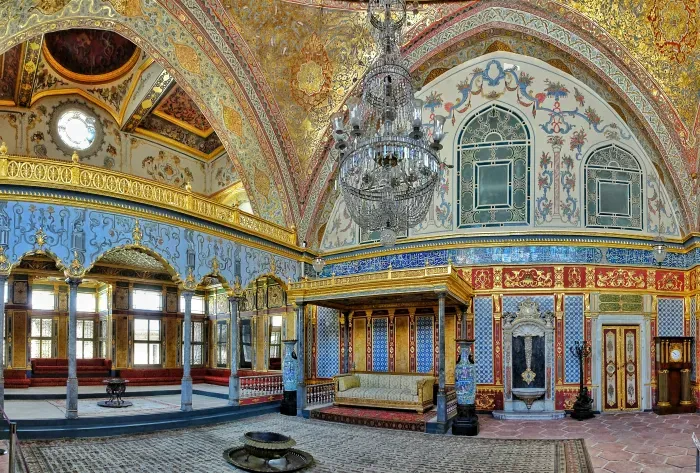
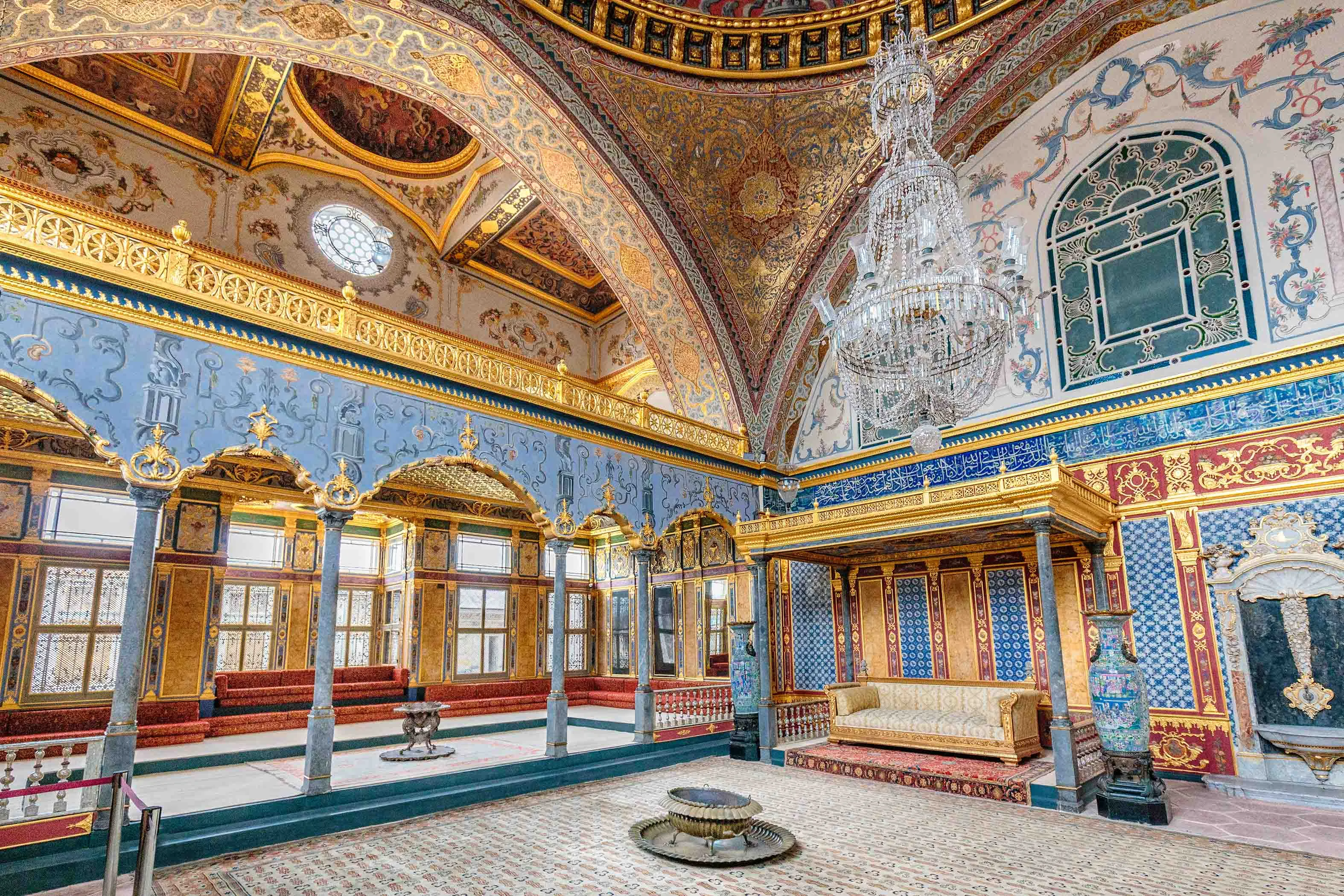
Administration breathed through chambers where counsel and decisions met—protocols, petitions, and presentations arranged along carpets and cushions, with language kept careful and firm.
Ceremony turned time into meaning—audiences and gifts, laws and logistics. Governance here was not a spectacle but a choreography of respect.
Craft and collections: tiles, manuscripts, and treasury
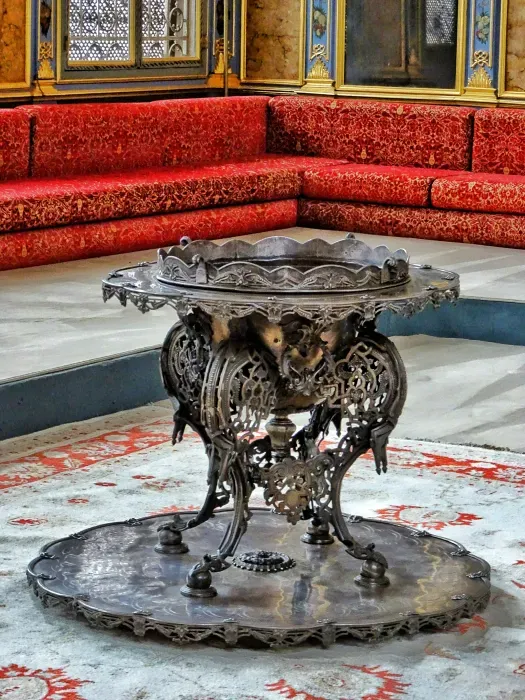
Iznik tiles held color like held breath—lapis, turquoise, and white in patient geometry. Manuscripts stored light in ink, and the Treasury kept ceremonial objects like crystallized gestures of a court’s inner language.
Craft here is the hush behind grandeur—calligraphy, carpentry, metalwork, fabric. Collections remember hands and minds; galleries make a quiet city of objects.
Libraries and learning
Libraries folded ideas into the palace’s daily fabric—scholars and scribes, inventories and maps, knowledge housed like a quiet current beneath ceremony.
Books, charts, and instruments gave the palace more than beauty—they gave it thought, letting decisions and learning share a single roof.
Gardens, terraces, and Bosphorus light
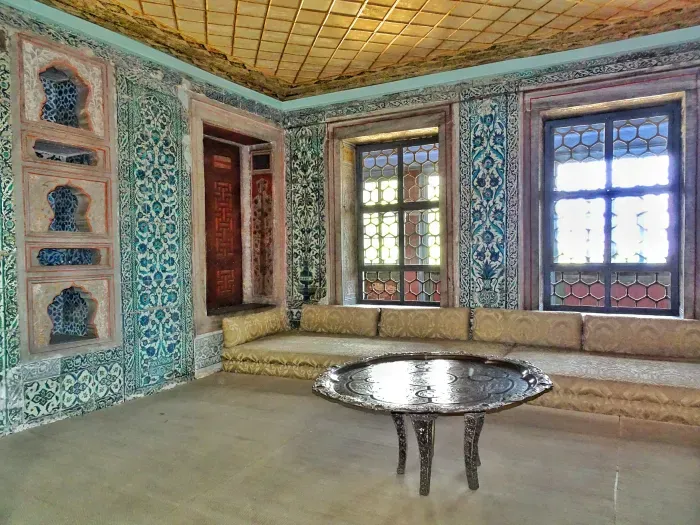
Gardens teach patience—cypress planting shade where decisions once stood, and terraces lay out the Bosphorus like a bright book. The palace’s calm is not emptiness but a considered hush.
Water, wind, and greenery are part of the architecture—light traveling over stone and leaves makes the palace feel always in conversation with the city beyond.
Sacred Relics: devotion and symbolism
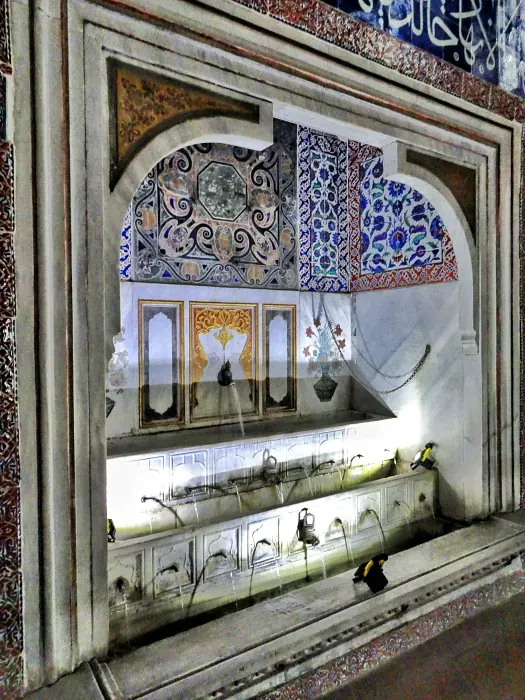
Sacred Relics gather reverence—objects carried across centuries bearing devotional weight. Visitors move softly here, reading not only labels but their own breath.
Symbols become bridges between time and the present—ritual and memory stand side by side, letting museums feel like places of thought as much as display.
Route planning with gentle pacing
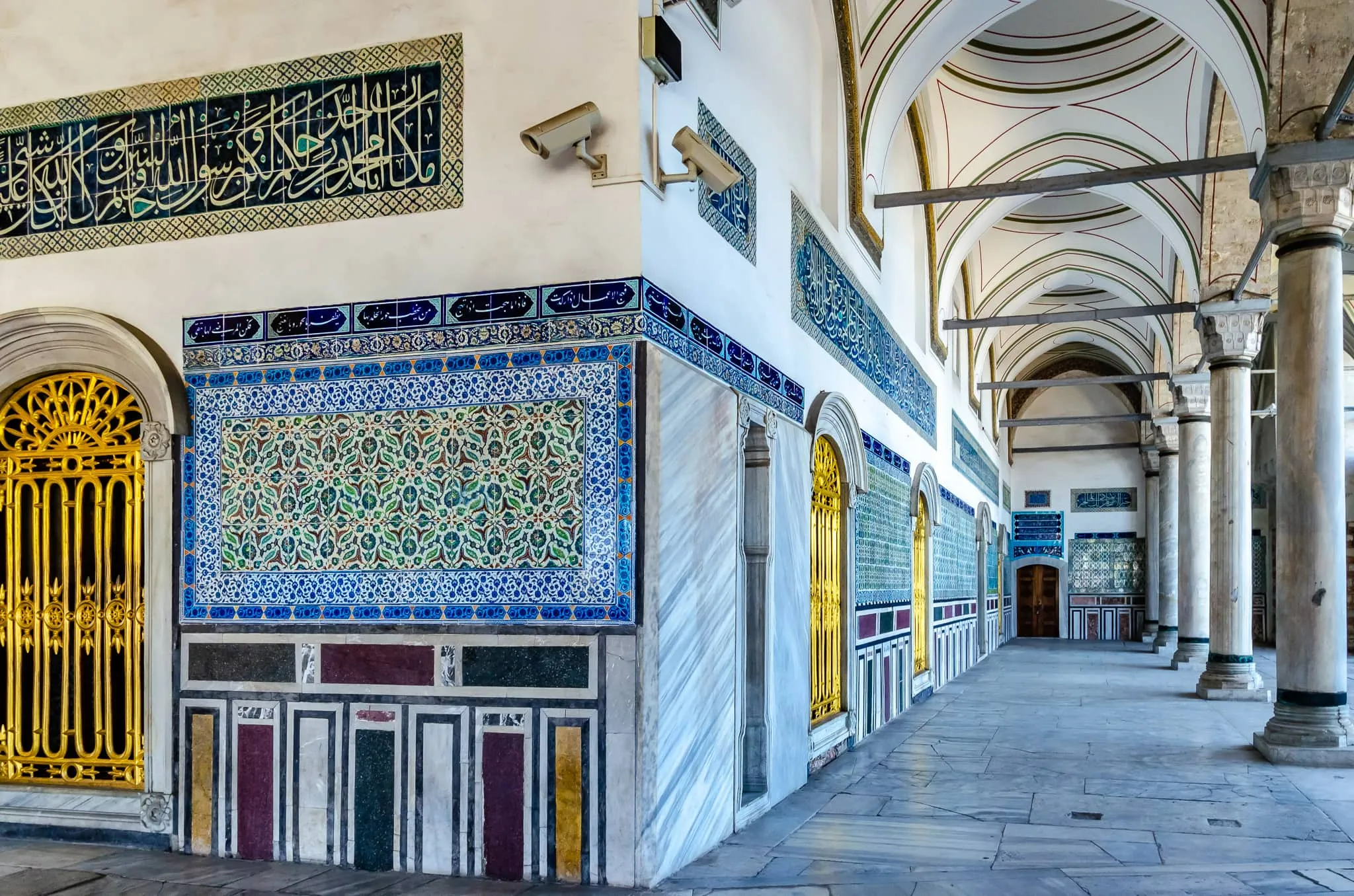
Begin at the First Courtyard, then move through administration and kitchens in the Second, the sultan’s closer world in the Third, and end with gardens in the Fourth. Add the Harem and Treasury as your timing allows.
Return often to shaded benches—perspective changes with light and crowd flow. Read tiles like a book: glazes speak of patience; manuscripts speak of thought; terraces speak of time.
Conservation in a living museum
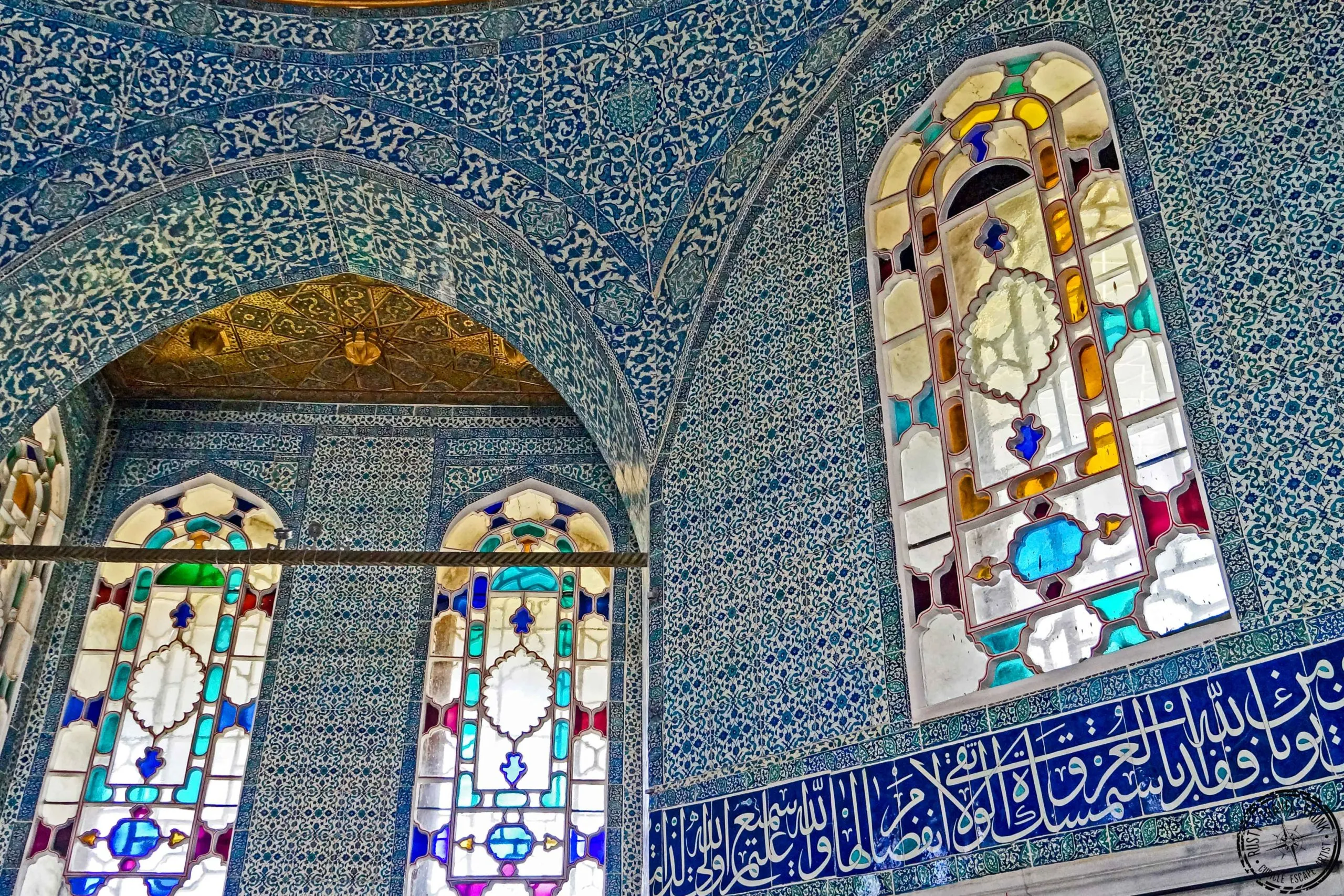
Conservation balances tourism, scholarship, and civic life—footfall and weather test materials, while experts read the palace like physicians reading a pulse.
Monitoring load and climate keeps galleries calm and safe. Occasional closures protect fragile elements, ensuring future visitors inherit a palace still able to speak.
Nearby complementary sites
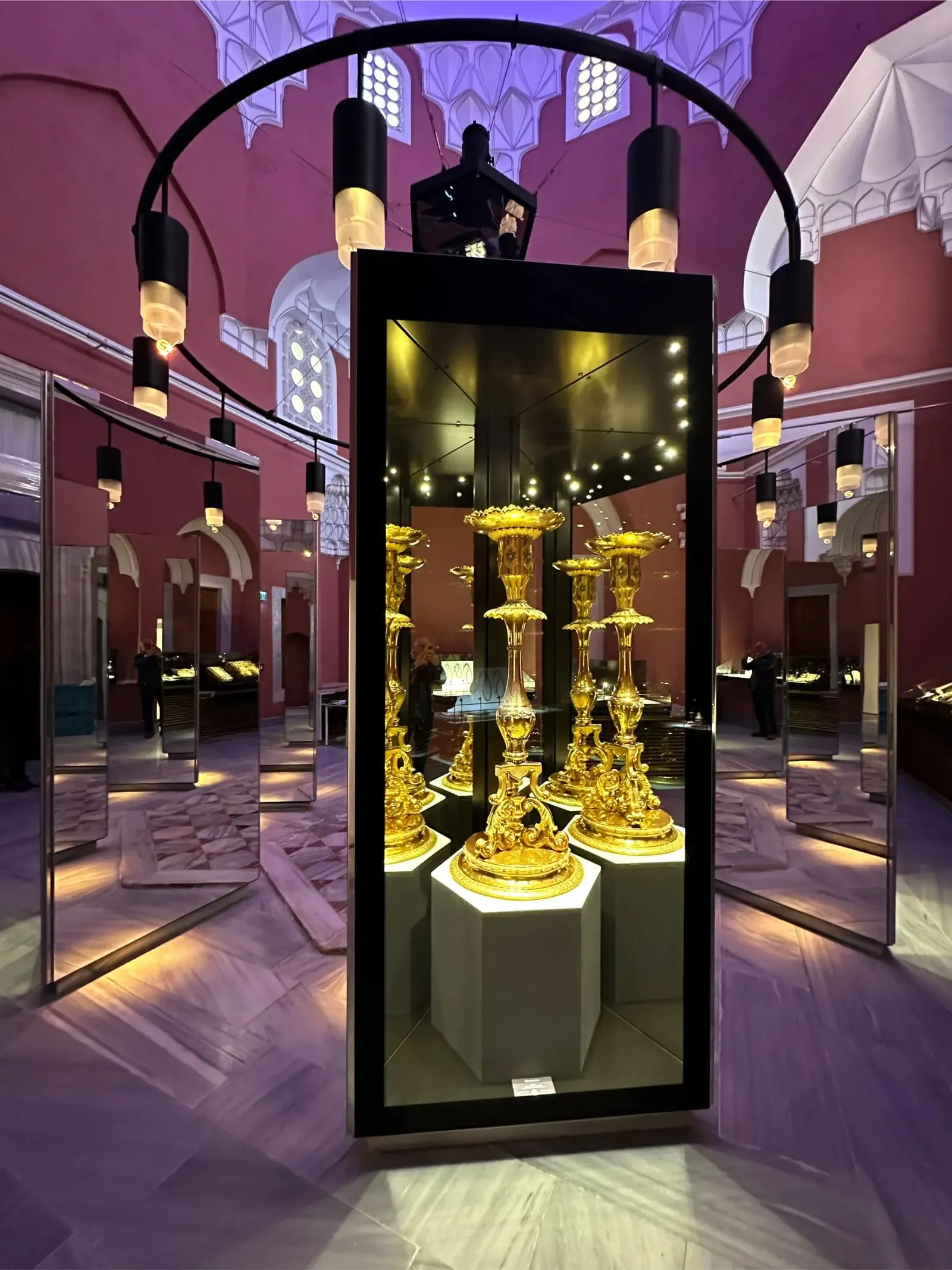
Hagia Sophia, Blue Mosque, Archaeology Museums, Basilica Cistern, and Gülhane Park enrich the story—each offers a facet of Istanbul’s conversation with devotion, craft, and landscape.
A gentle itinerary contrasts palace calm, museum quiet, garden shade, and city squares—threads you can weave into your own day of wonder.
Enduring legacy of Topkapi Palace
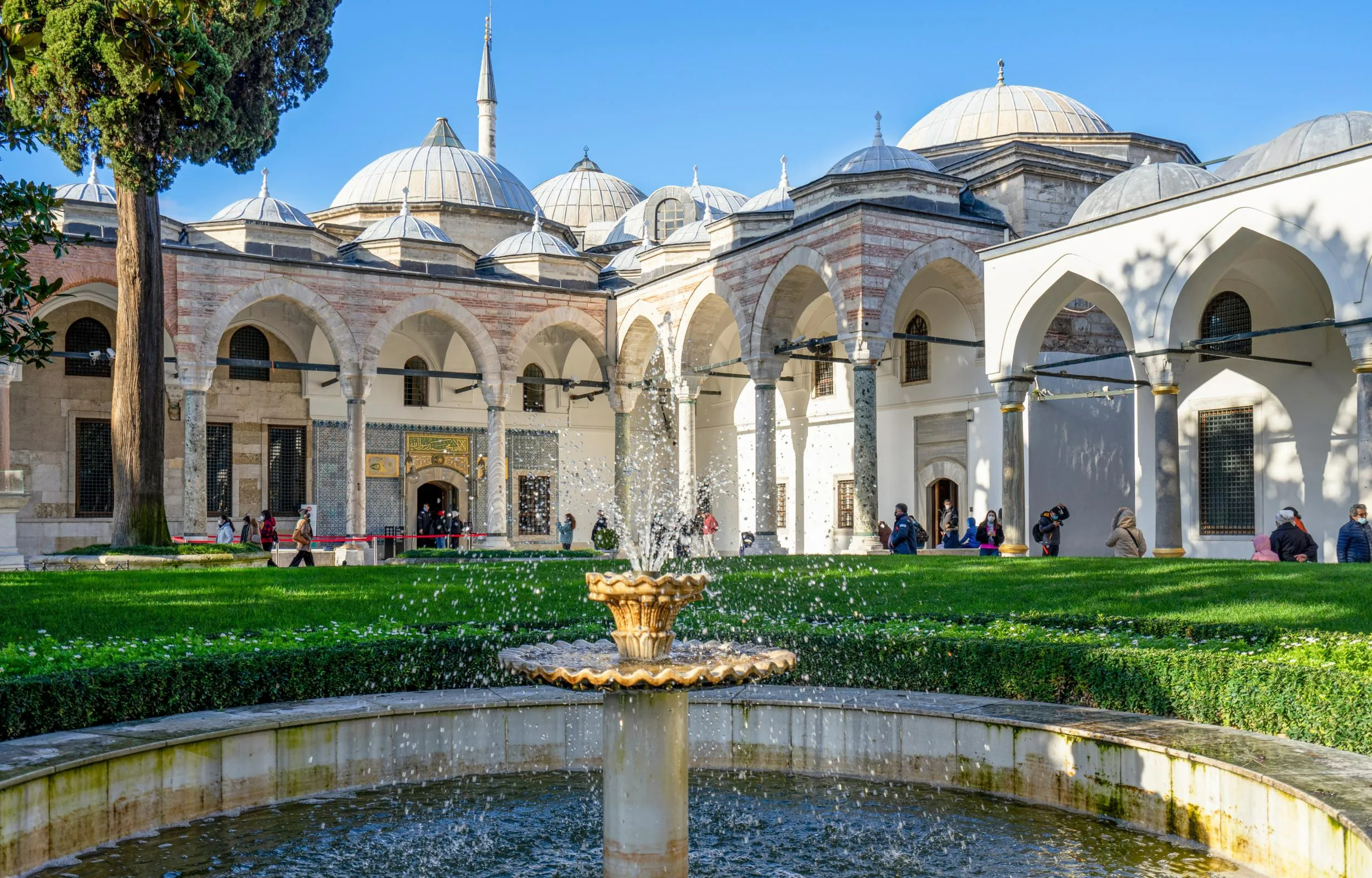
Topkapi Palace embodies the idea that ceremony can become wisdom—that architecture can host daily life and governance with grace. It is a bridge between ritual and thought, between gardens and city.
Ongoing study deepens gratitude for its calm courtyards, collections, and stewardship—shaping modern ethics of conservation, safety, and hospitality in living museums.
Table of Contents
Foundations: conquest, court, and the peninsula
After the conquest of Constantinople, the Ottomans drew court life into light and air—placing the palace on the Historic Peninsula where sea, gardens, and ceremony could speak together. The Bosphorus became not only a route but a horizon against which decisions felt measured.
Topkapi grew as a city within a city: kitchens as vast as villages, archives like quiet memory banks, and courtyards that turned movement into meaning—public rhythm outside, calm intention within.
Courtyard logic: from protocol to privacy
Topkapi unfolds in stages: the First Courtyard opens the approach, the Second organizes administration and kitchens, the Third narrows into the sultan’s closer world, and the Fourth lets gardens and terraces breathe over the water.
Each gate was a sentence in the palace’s grammar: processions, audiences, and quiet crossings. Architecture made etiquette visible—thresholds taught visitors when to speak and when to listen.
The Harem: layered daily life
The Harem balanced privacy, education, and ritual—apartments and classrooms, corridors and baths, a structured world where daily rhythms and learning were braided together in moderated calm.
Tiles caught light like soft water; lattices filtered sound; rooms kept secrets and stories. Life here was layered with rules and kindness—voices moving carefully through beautiful space.
Kitchens, logistics, and abundance
The palace’s kitchens were towns of their own—bread, stews, sweets, and spices moving with rhythm and precision. Logistics gave ceremony its ground: ingredients arriving like stories, meals departing like symphonies.
Chimneys wrote their silhouettes against the sky, and copper shone like a warm echo of fire. Craft here was daily and dignified—feeding not just people but a palace’s sense of order.
Governance: Divan and ceremony
Administration breathed through chambers where counsel and decisions met—protocols, petitions, and presentations arranged along carpets and cushions, with language kept careful and firm.
Ceremony turned time into meaning—audiences and gifts, laws and logistics. Governance here was not a spectacle but a choreography of respect.
Craft and collections: tiles, manuscripts, and treasury
Iznik tiles held color like held breath—lapis, turquoise, and white in patient geometry. Manuscripts stored light in ink, and the Treasury kept ceremonial objects like crystallized gestures of a court’s inner language.
Craft here is the hush behind grandeur—calligraphy, carpentry, metalwork, fabric. Collections remember hands and minds; galleries make a quiet city of objects.
Libraries and learning
Libraries folded ideas into the palace’s daily fabric—scholars and scribes, inventories and maps, knowledge housed like a quiet current beneath ceremony.
Books, charts, and instruments gave the palace more than beauty—they gave it thought, letting decisions and learning share a single roof.
Gardens, terraces, and Bosphorus light
Gardens teach patience—cypress planting shade where decisions once stood, and terraces lay out the Bosphorus like a bright book. The palace’s calm is not emptiness but a considered hush.
Water, wind, and greenery are part of the architecture—light traveling over stone and leaves makes the palace feel always in conversation with the city beyond.
Sacred Relics: devotion and symbolism
Sacred Relics gather reverence—objects carried across centuries bearing devotional weight. Visitors move softly here, reading not only labels but their own breath.
Symbols become bridges between time and the present—ritual and memory stand side by side, letting museums feel like places of thought as much as display.
Route planning with gentle pacing
Begin at the First Courtyard, then move through administration and kitchens in the Second, the sultan’s closer world in the Third, and end with gardens in the Fourth. Add the Harem and Treasury as your timing allows.
Return often to shaded benches—perspective changes with light and crowd flow. Read tiles like a book: glazes speak of patience; manuscripts speak of thought; terraces speak of time.
Conservation in a living museum
Conservation balances tourism, scholarship, and civic life—footfall and weather test materials, while experts read the palace like physicians reading a pulse.
Monitoring load and climate keeps galleries calm and safe. Occasional closures protect fragile elements, ensuring future visitors inherit a palace still able to speak.
Nearby complementary sites
Hagia Sophia, Blue Mosque, Archaeology Museums, Basilica Cistern, and Gülhane Park enrich the story—each offers a facet of Istanbul’s conversation with devotion, craft, and landscape.
A gentle itinerary contrasts palace calm, museum quiet, garden shade, and city squares—threads you can weave into your own day of wonder.
Enduring legacy of Topkapi Palace
Topkapi Palace embodies the idea that ceremony can become wisdom—that architecture can host daily life and governance with grace. It is a bridge between ritual and thought, between gardens and city.
Ongoing study deepens gratitude for its calm courtyards, collections, and stewardship—shaping modern ethics of conservation, safety, and hospitality in living museums.